
If your child plays competitive sport in Paarl, you know the calendar. Rugby, netball and hockey in winter. Cricket, athletics and tennis in summer. Then there are academy sessions, provincial trials, holiday camps, dance exams and extra gym work in between.
It hardly stops.
Somewhere in that schedule, many young athletes play through pain they’ve been told is “just part of the sport.” Sore knees. Tight hips. A shoulder that aches after every match. A lower back that the coach calls “growing pains.”
Sometimes that’s true. Often, though, the pain is an early warning that can be assessed and dealt with while it’s still small. Left alone, the body keeps finding ways around the problem until those workarounds feel normal. That’s when a niggle turns into an injury that costs a season.
The earlier a problem is picked up, the easier it usually is to sort out.
Why young athletes get injured more often now
Children are specialising in one sport earlier and training for it most of the year. Bodies that are still growing get less time to recover and less variety in how they move. The same muscles and joints take the same load week after week.
These are the problems we see most often in young athletes.
Knee ligament injuries, including ACL tears
ACL tears are especially common in girls who play sports with quick changes of direction, like netball, hockey and soccer. Most happen without contact. The athlete lands, cuts or stops, and the muscles around the knee don’t control it well enough.
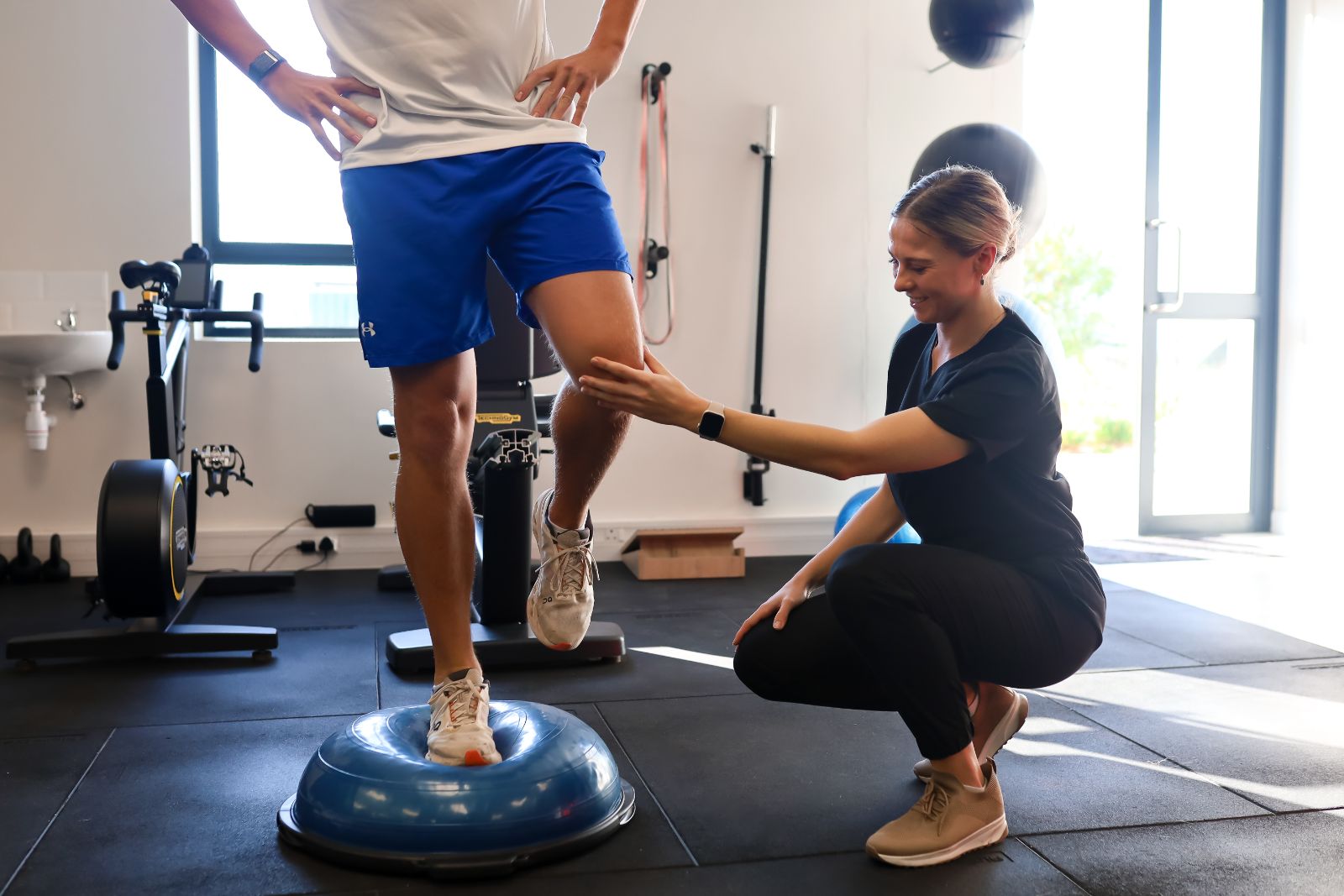
The good news is that this control can be trained. Research consistently shows that injury prevention programmes focused on landing, balance and strength can lower the risk of ACL injury in young athletes. A biokineticist can check how your child lands and changes direction, and work on the weak links before an injury happens.
If your child has already had ACL surgery, structured exercise rehab is a big part of getting back to sport safely. We work alongside your child’s surgeon and physiotherapist through this process.
Growth plate pain: Osgood-Schlatter and Sever’s
Growing bones have softer areas near the ends called growth plates. When the muscles attached to them pull too hard, too often, the area becomes painful.
- Osgood-Schlatter causes pain and sometimes a bump just below the kneecap.
- Sever’s disease causes pain at the back of the heel.
Both are common in active children going through growth spurts. Rest helps for a while, but the pain often returns once training picks up again. We look at what’s overloading the area, such as tight or weak muscles and how your child runs and jumps, and adjust their training load. Many children can keep playing at a modified level while it settles.
Shoulder, elbow and back pain in throwers and bowlers
Cricket bowlers, swimmers, tennis players, netball players and gymnasts repeat the same movement thousands of times. Their shoulders, elbows and lower backs take a lot of strain. Young fast bowlers in particular can develop lower back stress injuries. Back pain in a teenage bowler should always be checked, not brushed off.
Hip and groin problems
Hip flexor strains, groin pain and pain deep in the hip are common in rugby, hockey and soccer players. Often the hip has been labelled “tight” for months, but the real issue is that the muscles around it aren’t controlling movement well. Stretching alone usually doesn’t fix that. Retraining how the muscles work together often does.
Ankle sprains that keep coming back
The ankle sprain is the most common sports injury in children. After a sprain, the ligaments may heal, but the balance and control around the ankle often don’t recover on their own. That’s why so many children sprain the same ankle again and again. Balance and strength training after a sprain is one of the best-supported ways to lower the chance of it happening again.
Why rest and ice isn’t always enough
The usual cycle goes like this. Your child gets sore, rests, feels better, goes back to sport, and gets sore again.
Rest settles the irritated tissue. It doesn’t change the movement pattern or muscle weakness that caused the overload in the first place. So your child goes back to full training with the same body that got hurt.
Rest and ice still have their place, especially right after an injury. Lasting improvement usually also needs the cause to be found and trained. As biokineticists, we focus on that: how your child moves, which muscles aren’t doing their share, and how to rebuild strength and control so they can return to sport with confidence.
What parents should know about seeing a biokineticist
- You don’t need a referral. You can book directly.
- We assess the whole movement system, not only the sore spot. Knee pain sometimes starts at the hip or the foot.
- We’ll explain what we find and what the plan is. Recovery time differs from child to child, and we’ll talk you through what to expect after the first assessment.
- We work with your child’s team. With your permission, we can talk to coaches, physiotherapists and doctors about training changes and return to play.
- Medical aid may cover biokinetics. Many plans pay from your day-to-day or savings benefit. Check with your medical aid first.
Prevention is easier than recovery
Parents often tell us they wish they had come in sooner. A movement screening takes far less time, money and disruption than recovering from an ACL tear, a stress fracture or a shoulder that has been compensating for two seasons.
If your child plays competitive sport and has never had a movement screening, that’s a good place to start. We look at how they move, land, balance and generate strength, and show you where the weak spots are before they become injuries.
When to see a doctor first
Some symptoms need a medical assessment before any rehab. Take your child to a doctor if they have:
- Pain that wakes them at night or is there even at rest
- Swelling, redness or warmth around a joint, or a fever
- A limp with no clear cause, or they can’t put weight on a leg
- A knee or ankle that locks, gives way or swells quickly after an injury
- Pain that keeps getting worse over a few weeks
Frequently asked questions
Esti Smit, Registered Biokineticist (HPCSA) | Winelands Medical Centre, 1D New Eskdale Street, Paarl